Feeling Overwhelmed? Let’s Hit Pause Together
Stress sneaks in when life feels like a never-ending to-do list. I’ve been there—juggling work, family, and that constant ping of notifications. When my mind races, yoga becomes my reset button. It’s not just about stretching; it’s about creating space to breathe, slow down, and reconnect. Today, I’ll share five yoga poses for stress relief that calm your mind and soothe your nervous system, including some insights on yoga for stress relief. Ready to roll out your mat?
Why Yoga Works for Stress Relief
Yoga isn’t magic—it’s science-backed. When you move and breathe mindfully, your body activates the parasympathetic nervous system, which signals “rest and digest.” This lowers cortisol (the stress hormone) and improves mood. A study found that yoga significantly reduces anxiety and stress symptoms by promoting relaxation and mindfulness. That’s why these poses aren’t just pretty—they’re powerful.
Incorporating yoga for stress relief into your routine can transform your mental health and well-being.
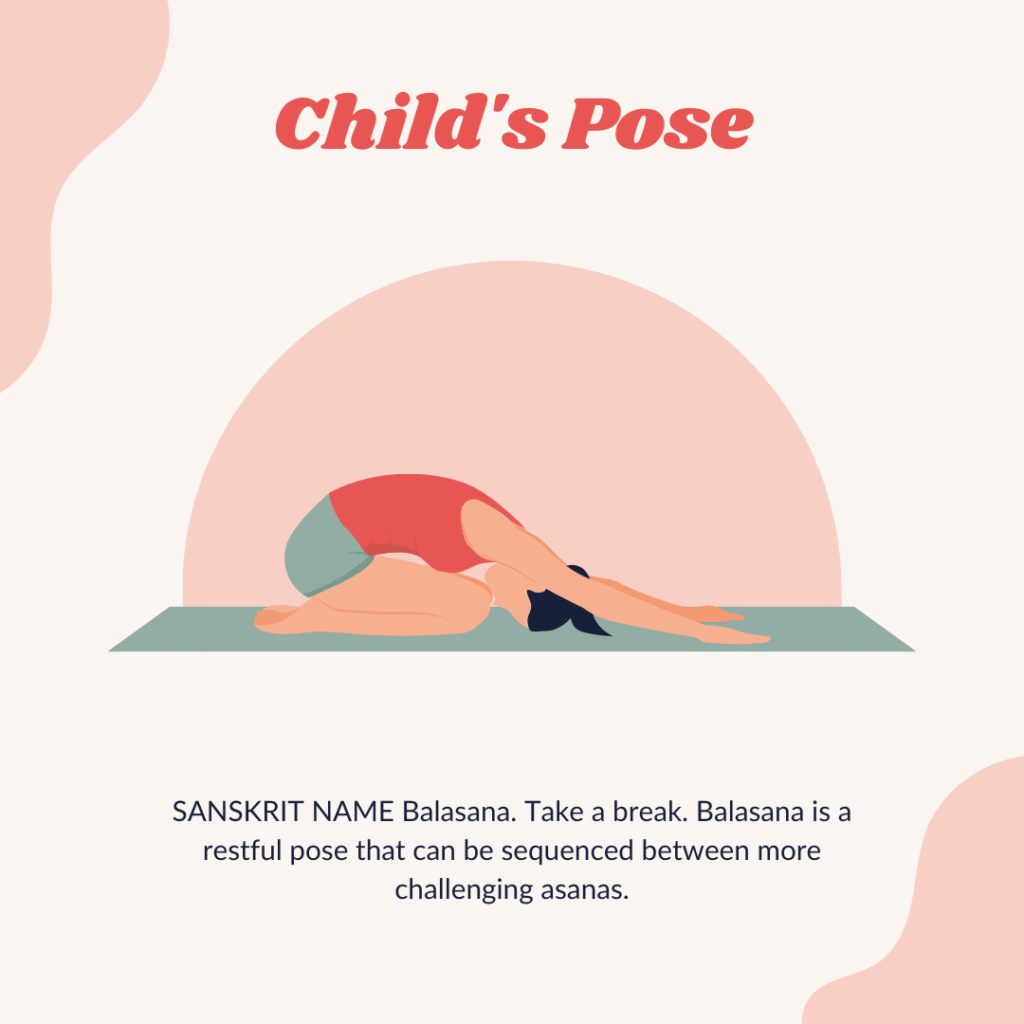
Pose 1: Child’s Pose (Balasana)
Why It Helps
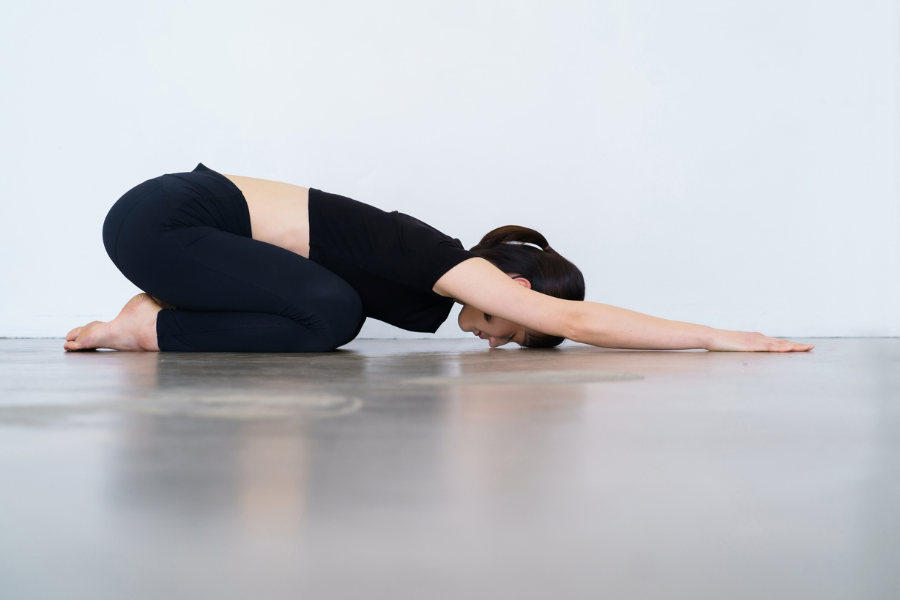
Child’s Pose feels like a warm hug for your nervous system. It gently stretches your spine and hips while calming your mind. I love sinking into this pose after a hectic day—it’s like pressing the reset button.
How to Do It
- Kneel on your mat and bring your big toes to touch.
- Sit back on your heels and fold forward, resting your forehead on the mat.
- Stretch your arms forward or let them relax by your sides.
- Breathe deeply for 5–10 breaths.
Knees Together vs. Knees Apart
- Knees Together: This variation supports your torso and feels more grounding. It’s great if you want a sense of security and gentle spinal stretch.
- Knees Apart: Opening the knees creates space for your belly and chest, allowing deeper breathing and a bigger hip stretch. Perfect if you’re looking for more release in the hips and lower back.
Tip: If your hips feel tight, place a cushion under your torso for extra comfort.
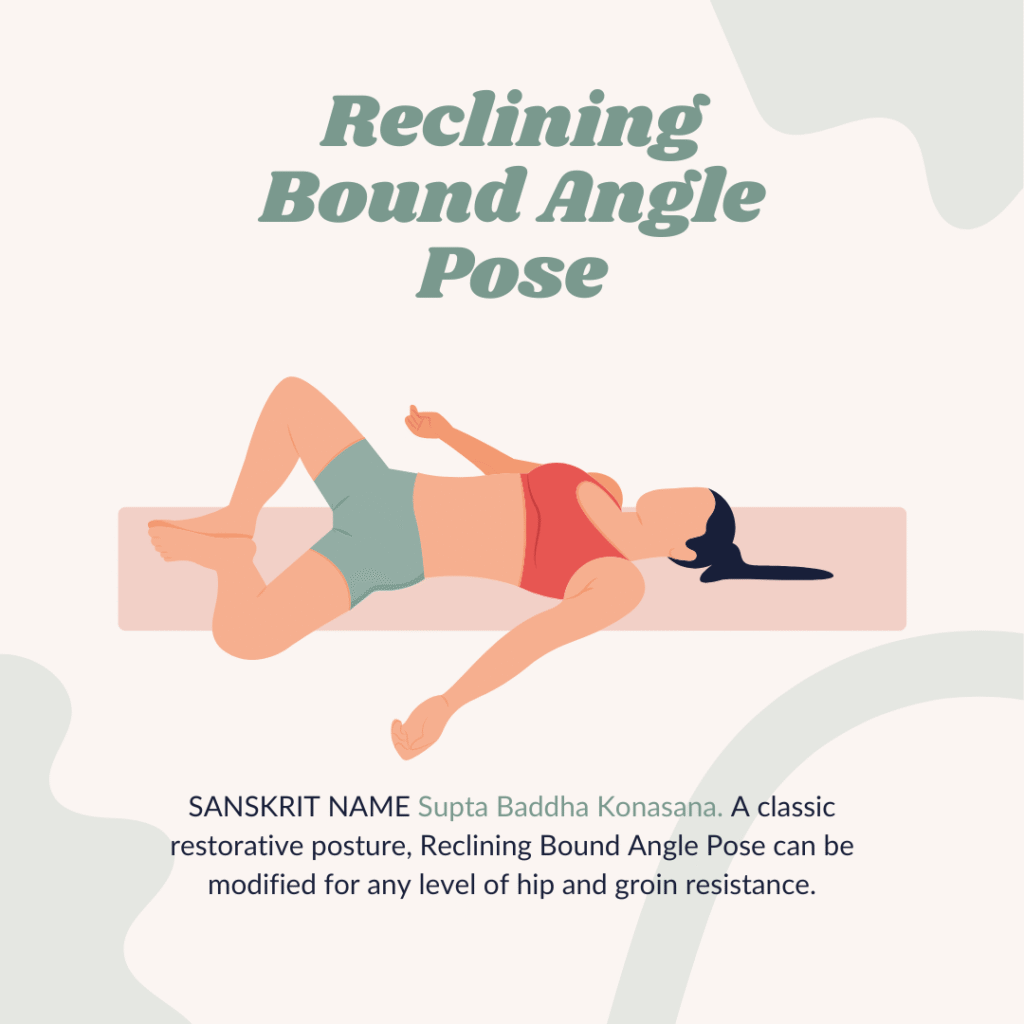
Pose 2: Reclined Bound Angle Pose (Supta Baddha Konasana)
Why It Helps
This restorative pose opens your hips and chest, creating a sense of release and calm. It’s perfect for melting away tension after a long day. I often use this pose when I need to slow down and reconnect with my breath.
How to Do It
- Lie on your back and bring the soles of your feet together.
- Let your knees fall open to the sides.
- Place cushions under your knees for support if needed.
- Rest your arms comfortably and breathe deeply for 5–10 minutes.
Bonus: Research in Complementary Therapies in Medicine shows that restorative poses like this reduce blood pressure and anxiety.
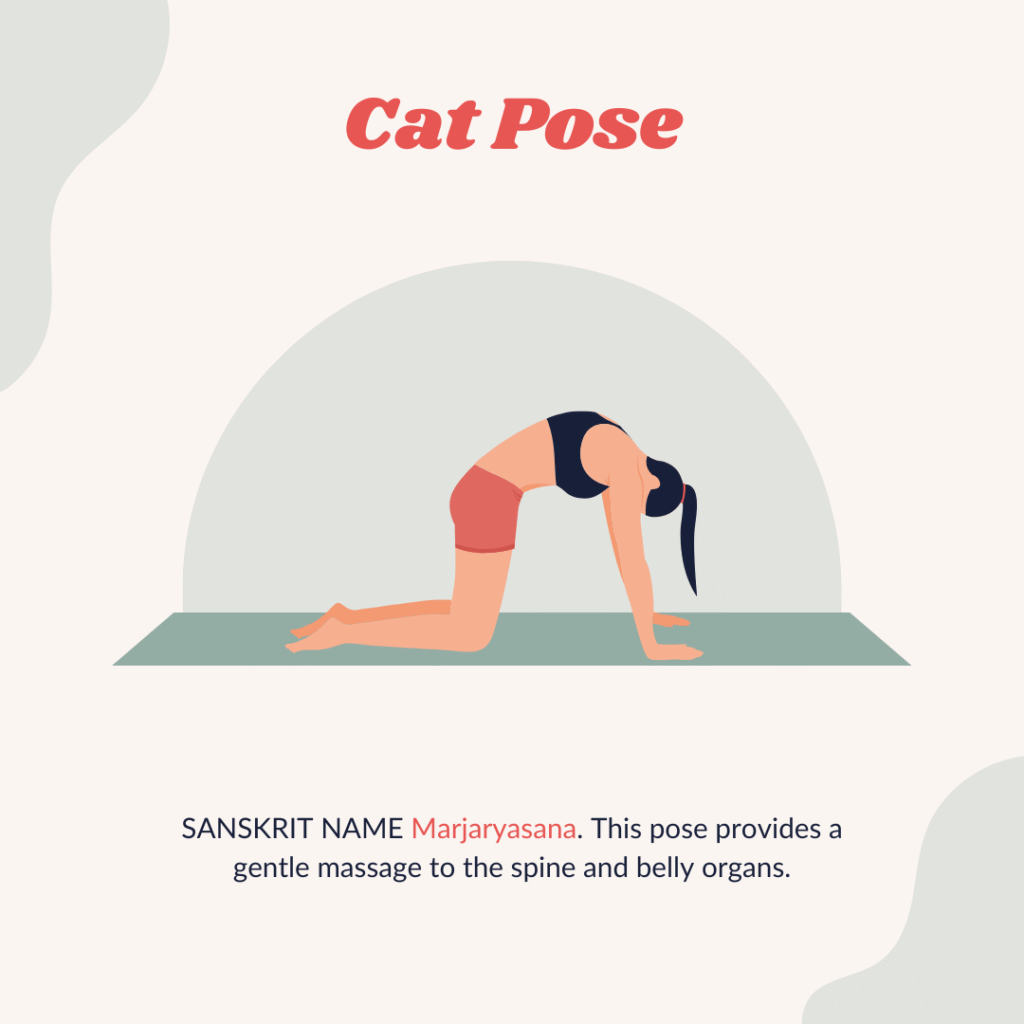
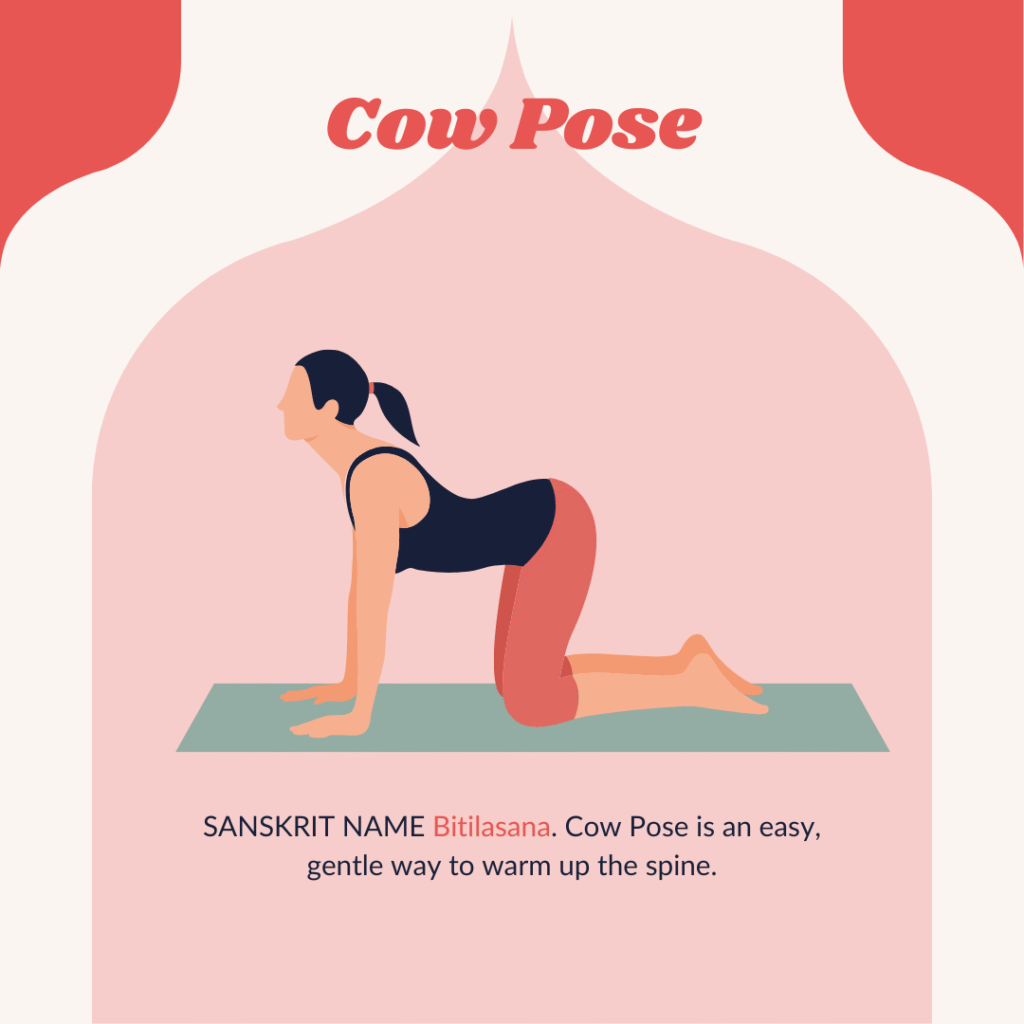
Pose 3: Cat-Cow Stretch (Marjaryasana-Bitilasana)
Why It Helps
Stress often tightens your back and shoulders. Cat-Cow melts that tension while syncing breath with movement. It’s energizing yet soothing—a perfect combo.
How to Do It
- Start on all fours with your wrists under shoulders and knees under hips.
- Inhale, arch your back, and lift your head (Cow).
- Exhale, round your spine, and tuck your chin (Cat).
- Repeat for 8–10 cycles, moving slowly.
Personal Note: I love doing this first thing in the morning. It wakes up my spine and clears mental fog.
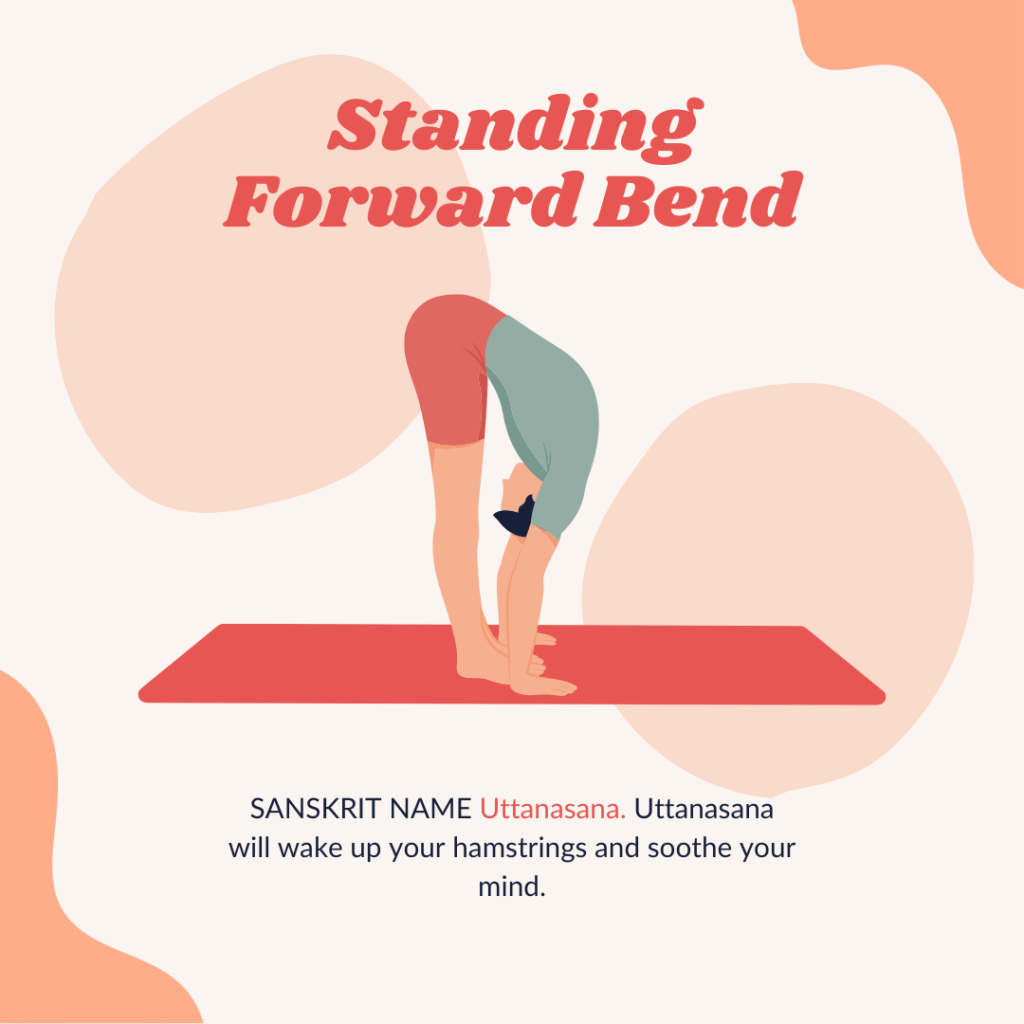
Pose 4: Standing Forward Fold (Uttanasana)
Why It Helps
This pose feels like letting go—literally. Folding forward calms your nervous system and stretches tight hamstrings. When stress hits, I hang here and breathe until my thoughts soften.
How to Do It
- Stand with feet hip-width apart.
- Hinge at your hips and fold forward, letting your head and arms hang.
- Bend your knees slightly if needed.
- Hold for 5–8 breaths, feeling the release.
Tip: Imagine stress dripping out of your fingertips. It sounds silly, but it works!
Pose 5: Corpse Pose (Savasana)
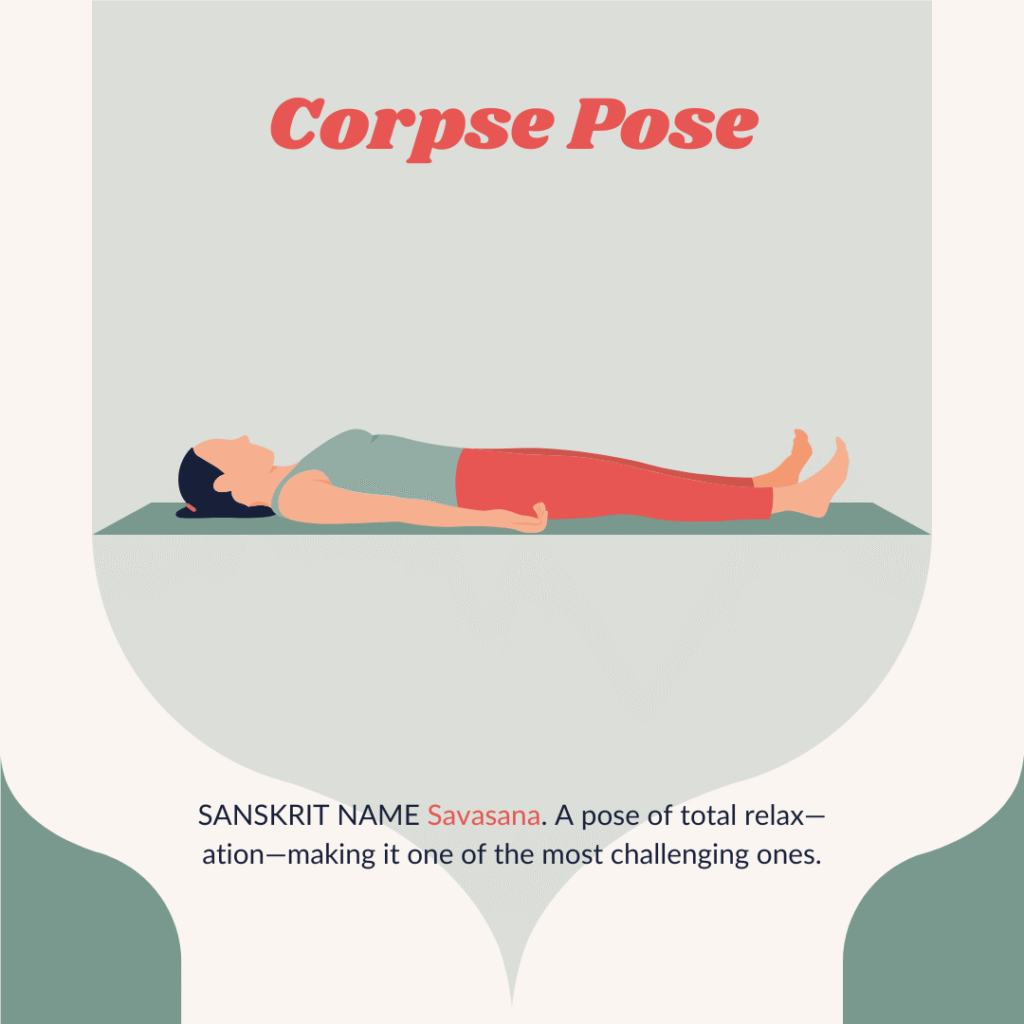
Why It Helps
Savasana is the ultimate chill-out pose. It teaches your body to fully relax—a skill we often forget. Studies in Evidence-Based Complementary and Alternative Medicine confirm that deep relaxation reduces stress markers and improves sleep quality.
How to Do It
- Lie flat on your back with arms and legs comfortably spread.
- Close your eyes and focus on slow, deep breaths.
- Stay for 5–10 minutes, letting go of every muscle.
Pro Tip: Use a soft blanket and dim the lights for extra coziness.
Quick Tips to Maximize Stress Relief
- Practice regularly: Even 10 minutes a day makes a difference.
- Pair with breathwork: Slow, deep breathing amplifies relaxation.
- Create a calming space: Light a candle or play soft music.
- Listen to your body: Skip poses that feel uncomfortable.
How Often Should You Do These Poses?
Consistency beats intensity. I aim for three short sessions a week, but even one session can help. If you’re new to yoga, start small—two poses for five minutes each—and build from there.
The Science Behind Yoga and Stress
Yoga reduces stress through:
- Lower cortisol levels: Studies show regular practice decreases stress hormones.
- Improved heart rate variability: This indicates better resilience to stress.
- Enhanced mindfulness: Focusing on breath and movement quiets mental chatter.
Reference: Journal of Alternative and Complementary Medicine highlights yoga’s role in reducing perceived stress and improving overall well-being.
Final Thoughts: Your Stress-Free Toolkit
Stress is inevitable, but how we respond matters. These five yoga poses for stress relief aren’t just exercises—they’re tools for mental clarity and emotional balance. Next time life feels overwhelming, roll out your mat and give yourself permission to pause. You deserve it.
Ready to start? Grab your mat, pick one pose, and breathe. Your mind will thank you.