Feeling Sluggish or Mentally Foggy? Your Body Might Just Need to Move
I’ve had those days where I feel drained before noon, even after a full night’s sleep. My brain feels foggy, my motivation dips, and everything feels heavier than it should. Sound familiar? That’s usually my cue to get moving—and not in a “run five miles” kind of way. I mean a simple, energizing workout routine at home that lifts my mood and gets my blood flowing.
If you’re looking for a way to feel more alive, focused, and emotionally balanced without leaving your house, this post is for you. In this blog post, I’ll walk you through a workout routine at home that’s designed to boost both energy and mood, and I’ll explain why it works—backed by science and a little personal experience.
Why Movement Boosts Energy and Mood
Let’s start with the “why.” You don’t need a gym membership or fancy equipment to feel better. You just need to move your body intentionally.
The Science Behind It
- Exercise increases endorphins, which are natural mood elevators.
- It also improves circulation, delivering more oxygen to your brain and muscles.
- Regular movement helps regulate cortisol, the stress hormone that can leave you feeling anxious or fatigued.
- According to research, even short bouts of moderate exercise can significantly improve mood and reduce symptoms of depression and anxiety.
Why Workout Routine at Home Work So Well
- You can do them anytime—no commute, no schedule.
- You’re in control of the pace, intensity, and environment.
- They’re easier to stick with, which means more consistent benefits.
What Makes a Workout Routine at Home Effective for Energy and Mood?
Not all workouts are created equal. If your goal is to feel more energized and emotionally balanced, here’s what your routine should include:
1. Low to Moderate Intensity
You don’t need to exhaust yourself. In fact, pushing too hard can leave you feeling more drained. Aim for movement that feels invigorating, not punishing.
2. Variety
Mixing up your workouts keeps things interesting and engages different muscle groups. It also prevents mental burnout.
3. Mind-Body Connection
Incorporate exercises that encourage you to tune into your breath and body—like yoga, stretching, or mindful movement.
4. Consistency Over Perfection
You’ll feel the benefits more from 15 minutes daily than from one intense session a week.
The Best Workout Routine at Home to Boost Energy and Mood
Here’s a sample weekly plan you can follow or adapt. It’s designed to be flexible, beginner-friendly, and mood-boosting.
Day 1: Full-Body Wake-Up (20 minutes)
- 2 minutes: March in place or light jogging
- 1 minute: Arm circles + shoulder rolls
- 2 minutes: Bodyweight squats
- 2 minutes: Standing lunges
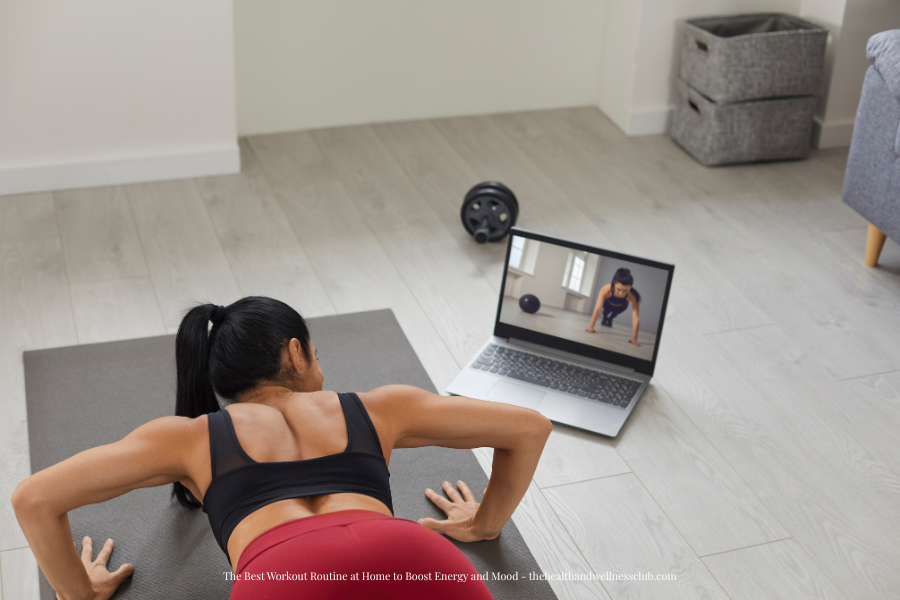
- 2 minutes: Push-ups or modified push-ups
- 2 minutes: Plank hold or bird-dog
- 2 minutes: Tricep dip
- 5 minutes: Stretch (hamstrings, hips, chest)
- 4 minutes: Deep breathing + gentle movement
Why it works: This routine activates major muscle groups and gets your heart rate up without overdoing it.
Day 2: Mood-Boosting Cardio (15–20 minutes)
- 3 minutes: Warm-up (march or dance)
- 30 seconds each:
- Jumping jacks
- High knees
- Butt kicks
- Side steps
- Repeat 3–4 rounds
- 5 minutes: Cool down + stretch
Why it works: Cardio releases endorphins and helps shake off mental fog.
Day 3: Strength + Stability (20 minutes)
- 2 sets of 10–12 reps each:
- Squats
- Glute bridges
- Wall push-ups
- Standing rows (use resistance bands or water bottles)
- Calf raises
- 5 minutes: Core work (plank, dead bug, side crunches)
- 5 minutes: Stretch
Why it works: Strength training improves posture, confidence, and long-term energy levels.
Day 4: Restorative Movement (15–30 minutes)
- Gentle yoga flow or stretching
- Focus on breath, slow transitions, and body awareness
- Include poses like child’s pose, cat-cow, forward fold, and seated twist
Why it works: Restorative movement calms the nervous system and helps you reconnect with your body.
Day 5: Dance or Flow (20 minutes)
- Put on your favorite playlist
- Move freely—dance, sway, stretch
- Alternate between upbeat and slow songs
- End with 5 minutes of breathwork or meditation
Why it works: Creative movement boosts dopamine and helps release emotional tension.
Day 6: Core + Posture Reset (15–20 minutes)
- 2 sets of:
- Dead bugs
- Bird-dogs
- Side planks
- Wall angels
- Standing posture drills
- 5 minutes: Stretch and breathwork
Why it works: A strong core supports better posture, which improves energy and reduces fatigue.
Day 7: Active Recovery or Nature Walk
- Go for a walk outdoors if possible (it reduces cortisol and stress belly)
- Focus on your surroundings, breath, and pace
- Stretch lightly afterward
Why it works: Walking in nature reduces cortisol and improves mood. Even a short walk can reset your energy.
Tips to Stay Motivated with Your Workout Routine at Home
Let’s be honest—starting is easy. Sticking with it? That’s the real challenge. Here’s what helps me stay on track:
1. Keep It Short and Sweet
You don’t need an hour. Even 10–20 minutes can make a difference.
2. Create a Ritual
Pair your workout with something enjoyable—like lighting a candle, playing music, or wearing your favorite leggings.
3. Track Your Mood
Keep a simple journal or note on your phone. Write how you feel before and after each workout. You’ll start to see patterns.
4. Mix It Up
Rotate between strength, cardio, yoga, and dance. Your body and brain love variety.
5. Celebrate Small Wins
Did you show up today? That’s a win. Did you stretch instead of skipping altogether? Another win.
6. Consider Minimal Home Gym Equipment
Sometimes, having a few essentials—like resistance bands, a yoga mat, or a pair of dumbbells—can make your workout more convenient and effective. You don’t need a full setup, just a few tools that support your goals. If you’re curious about what’s worth investing in, check out my blog post on the best home gym equipment for small spaces and simple routines.

- Imported
- LEGENDARY DURABILITY & STABILITY: The original Manduka PRO mat, trusted by teachers worldwide, delivers unmatched stabil…
- PREMIUM STUDIO-QUALITY CUSHIONING: With ultra-dense 6mm cushioning, the PRO mat delivers superior joint protection and s…

- TRANSFORM YOUR PRACTICE – Premium special edition mat featuring a bold and beautiful rainbow variant of our unique syste…
- ULTIMATE GRIP – This premium mat benefits from the ground breaking Liforme “GripForMe” material that gives you unparalle…
- REVOLUTIONARY ALIGNMENT SYSTEM – Our intelligently designed unique “AlignForMe” system has been bolstered by this mat’s …

- 【15 in1 Adjustable Dumbbells】You will receive a pair of 52.5 lb dumbbells, each adjustable in 15 different weights: 5/7….
- 【1 second weight adjustment】No need to disassemble, just rotate the handle with one hand, you can easily realize the gea…
- 【Double auto-locking design】Double safety locks, anti-fall design, must be rotated on the base to adjust the weight, aut…

- Upgrade Workout Bands: Our Resistance bands for legs and butt can help you solve the problem of the body shape,exercise …
- Suitable for Many Exercise: Our Exercise bands are ideal for assisting in P90x, CrossFit, Yoga, Insanity, Pilates, Hot Y…
- Band Easy to Carry & Use: The best of the resistance band easy to carry anywhere in Travel, Home, Gym, etc. The resistan…
What If You’re Feeling Too Tired to Work Out?
I’ve been there. Some days, even rolling out a yoga mat feels like too much. On those days, I do one of three things:
- Stretch for 5 minutes.
- Go for a short walk.
- Put on music and move however I feel.
The goal isn’t perfection—it’s momentum. Movement creates energy. The more you move, the more you’ll want to move.
Bonus: How to Customize Your Workout Routine at Home
Your body is unique, and your routine should reflect that. Here are a few ways to personalize your plan:
- If you’re short on time: Break your workout into two 10-minute sessions.
- If you’re feeling anxious: Focus on breath-led movement like yoga or tai chi.
- If you want to build strength: Add resistance bands or light weights to your routine.
- If you’re low on motivation: Try a workout video or follow a challenge with a friend.
Warm reminder: Your workout routine at home should feel supportive, not stressful.
Final Thoughts: Your Energy and Mood Are Worth Prioritizing
You don’t need a gym, a personal trainer, or a perfect schedule. You just need a plan that feels doable and enjoyable. This workout routine at home is designed to help you feel better—not just physically, but mentally and emotionally too.
So if you’re feeling stuck, sluggish, or just off, try moving your body. Start small. Stay consistent. And notice how your energy shifts.
Your mood matters. Your energy matters. And you deserve to feel good in your body—right at home.