Why Bedtime Yoga Is a Game-Changer
Ever crawl into bed feeling tired but wired? I know that feeling all too well. If you want to transform your sleep, try bedtime yoga—and it completely transformed my nights. Gentle yoga before bed helps me release the day’s tension, quiet my mind, and ease into sleep without tossing and turning.
And here’s the best part: it’s not just a feel-good ritual. Science backs it up. Studies show that yoga can improve sleep quality, reduce stress, and calm the nervous system. So if you’ve been struggling with restless nights, these poses might be the missing piece in your bedtime routine.
The Secret: Yoga and Your Parasympathetic Nervous System
Let’s talk about why bedtime yoga works so well. It’s all about activating your parasympathetic nervous system—the “rest and digest” mode. When you’re stressed, your body flips into sympathetic mode (fight or flight), which keeps your heart rate up and your mind racing. Not exactly the recipe for better sleep, right?
Gentle yoga poses, combined with slow breathing, stimulate the vagus nerve, which signals your body to relax. This lowers your heart rate, reduces cortisol (the stress hormone), and prepares your brain for deep, restorative sleep. Think of it as a natural sleep switch you can turn on every night.
How to Use This Guide
You don’t need a 60-minute class or fancy props. Just 10–15 minutes, a quiet space, and a willingness to slow down. These 10 gentle bedtime yoga poses are beginner-friendly, soothing, and perfect for winding down after a long day. In addition to bedtime yoga, there are other lifestyle practices that you can incorporate for better sleep. This blog post, breaks them all down in details.
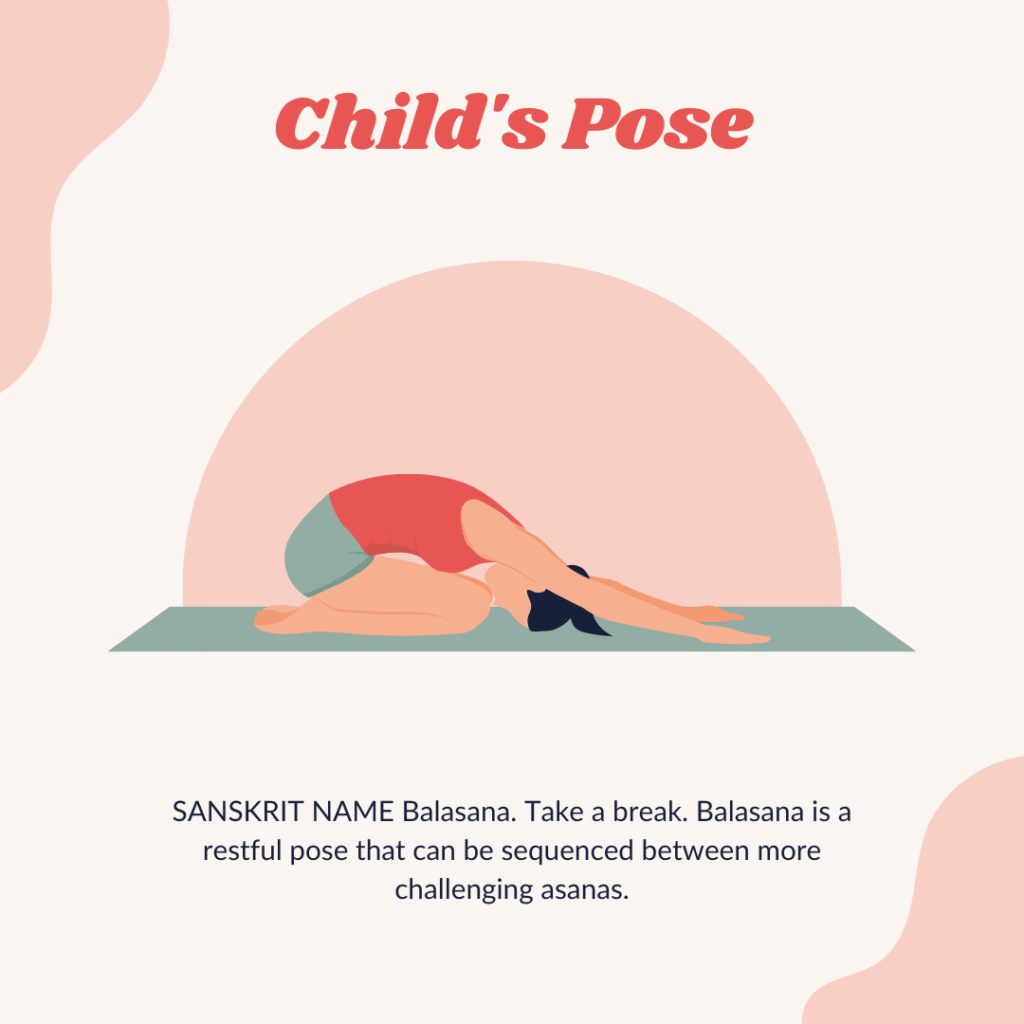
1. Child’s Pose (Balasana)
This pose feels like a hug for your nervous system. Kneel on the floor, bring your big toes together, and fold forward with arms stretched out or resting by your sides.
Why it helps: Child’s Pose gently stretches the hips and back while calming the mind. It’s grounding and signals safety—perfect for bedtime.
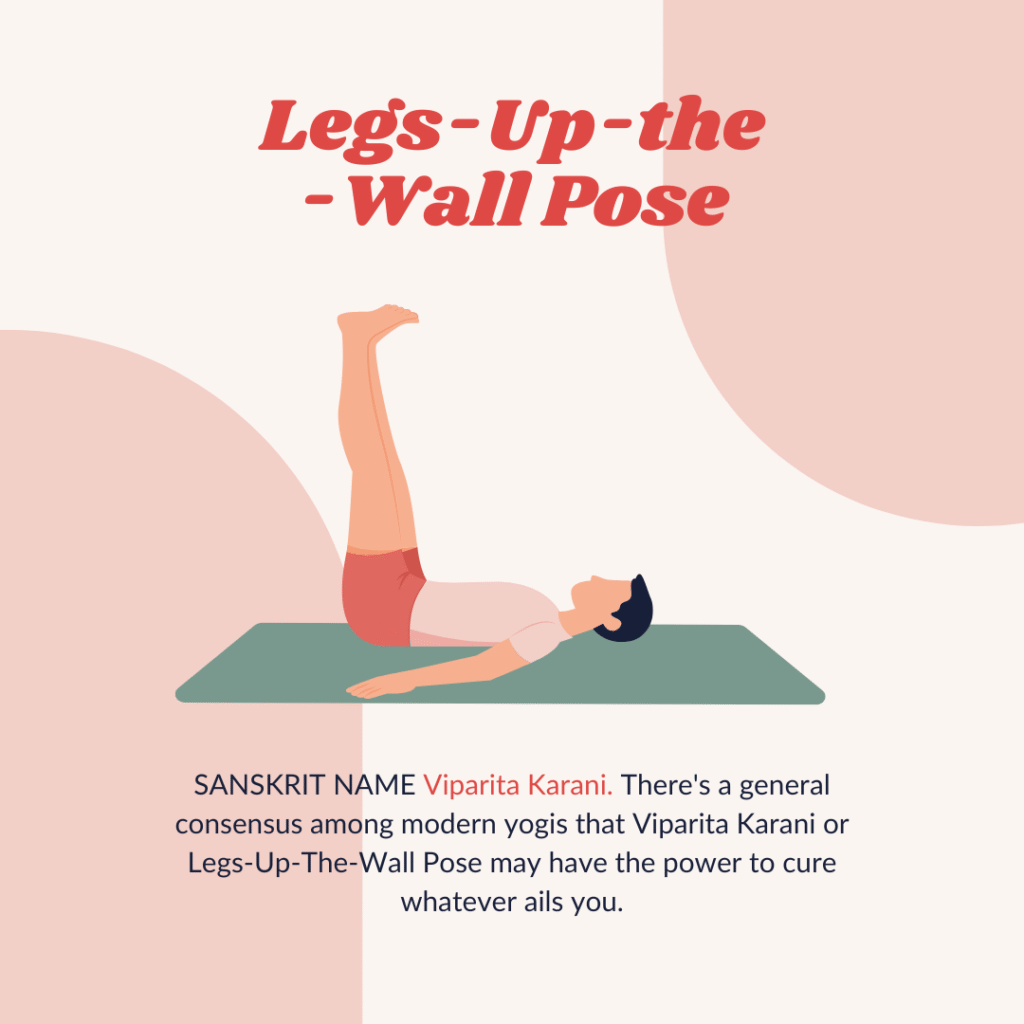
2. Legs Up the Wall (Viparita Karani)
Lie on your back and extend your legs up against a wall. Keep your arms relaxed by your sides.
Why it helps: This inversion improves circulation, reduces swelling in the legs, and activates the parasympathetic nervous system for better sleep.
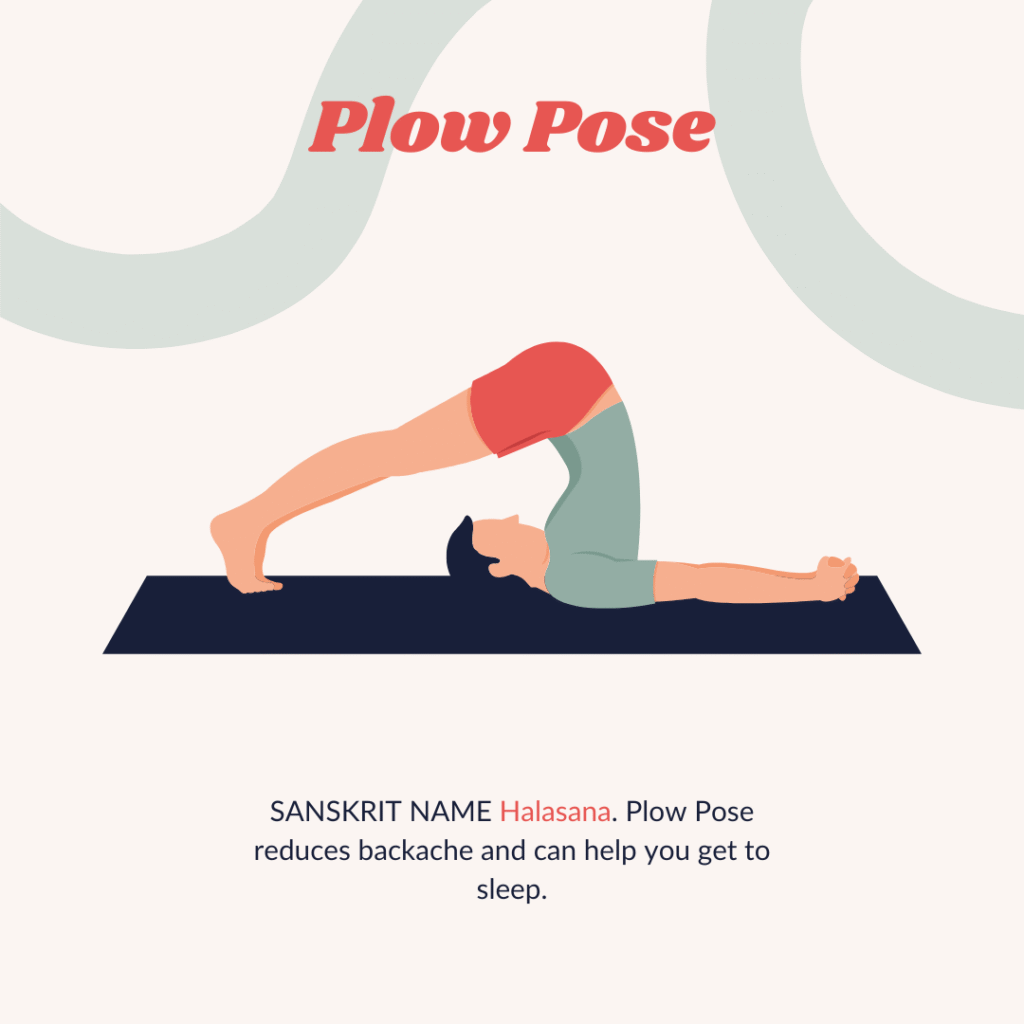
3. Plow Pose (Halasana)
Lie on your back, lift your legs overhead, and gently bring your toes toward the floor behind your head. Keep your neck long and avoid forcing the stretch.
Why it helps: Plow Pose stretches the spine and shoulders, calms the nervous system, and promotes deep relaxation. It’s excellent for reducing fatigue and preparing the body for rest.
Tip: If your feet don’t reach the floor, rest them on a pillow or keep your hands supporting your lower back.
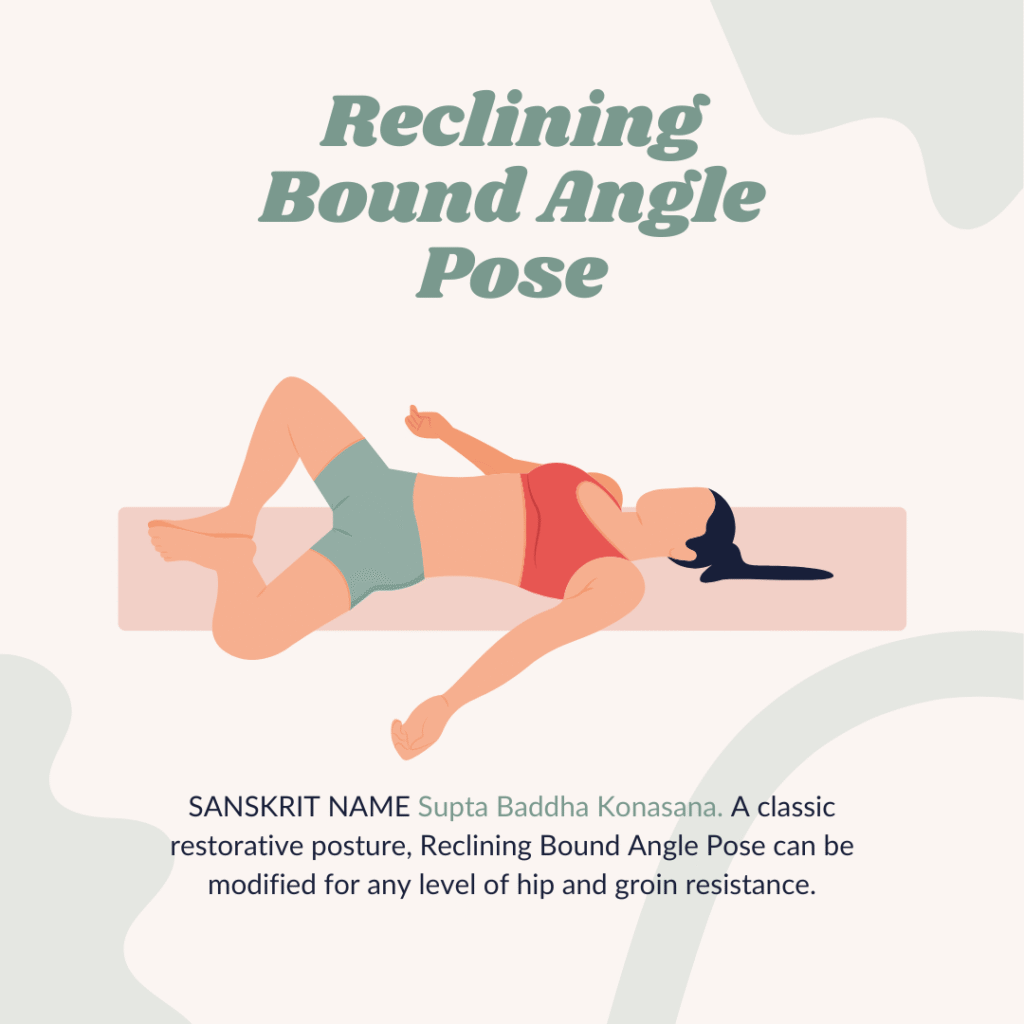
4. Reclined Bound Angle Pose (Supta Baddha Konasana)
Lie on your back, bring the soles of your feet together, and let your knees fall open. Support them with pillows if needed.
Why it helps: This pose opens the hips and encourages deep belly breathing, which lowers stress hormones.
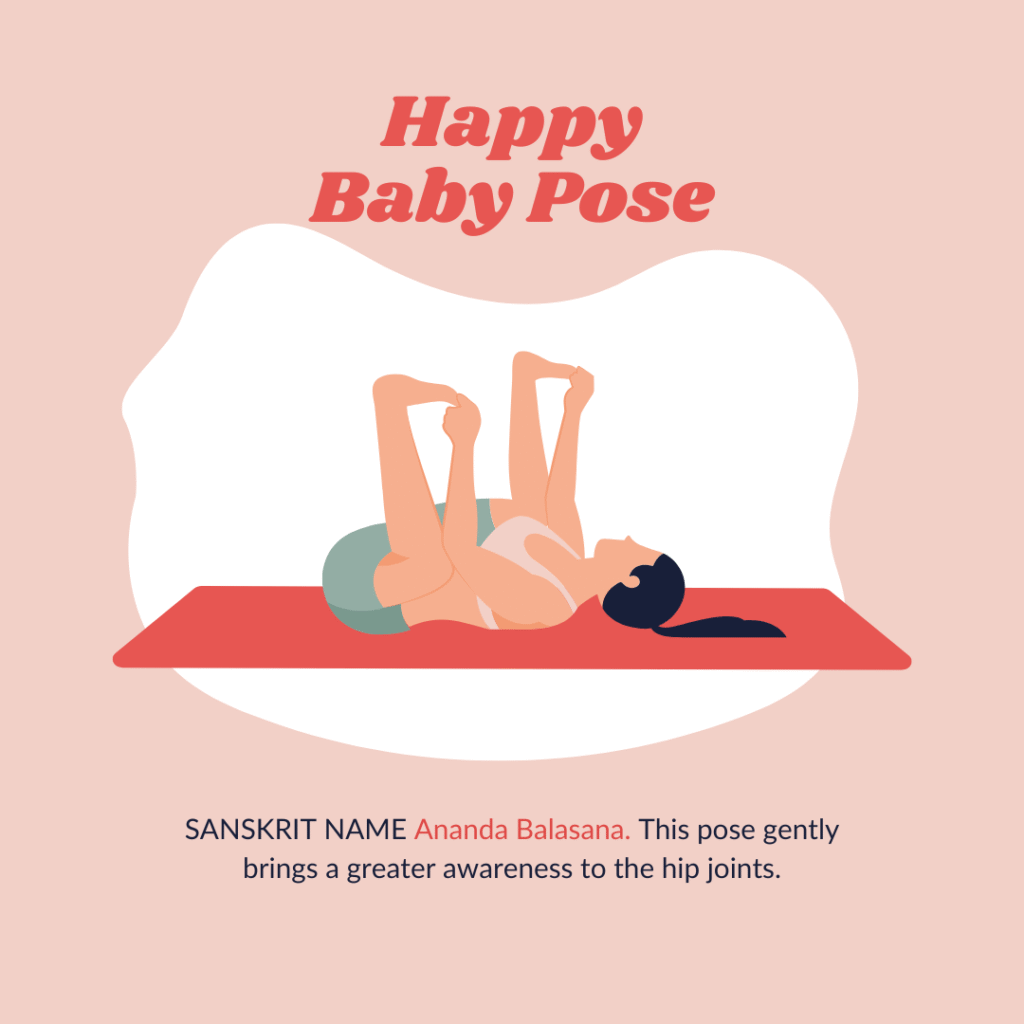
5. Cat-Cow Stretch (Marjaryasana-Bitilasana)
Start on all fours and alternate between arching your back (cow) and rounding it (cat).
Why it helps: Gentle spinal movement relieves tension from sitting all day and preps your body for relaxation.

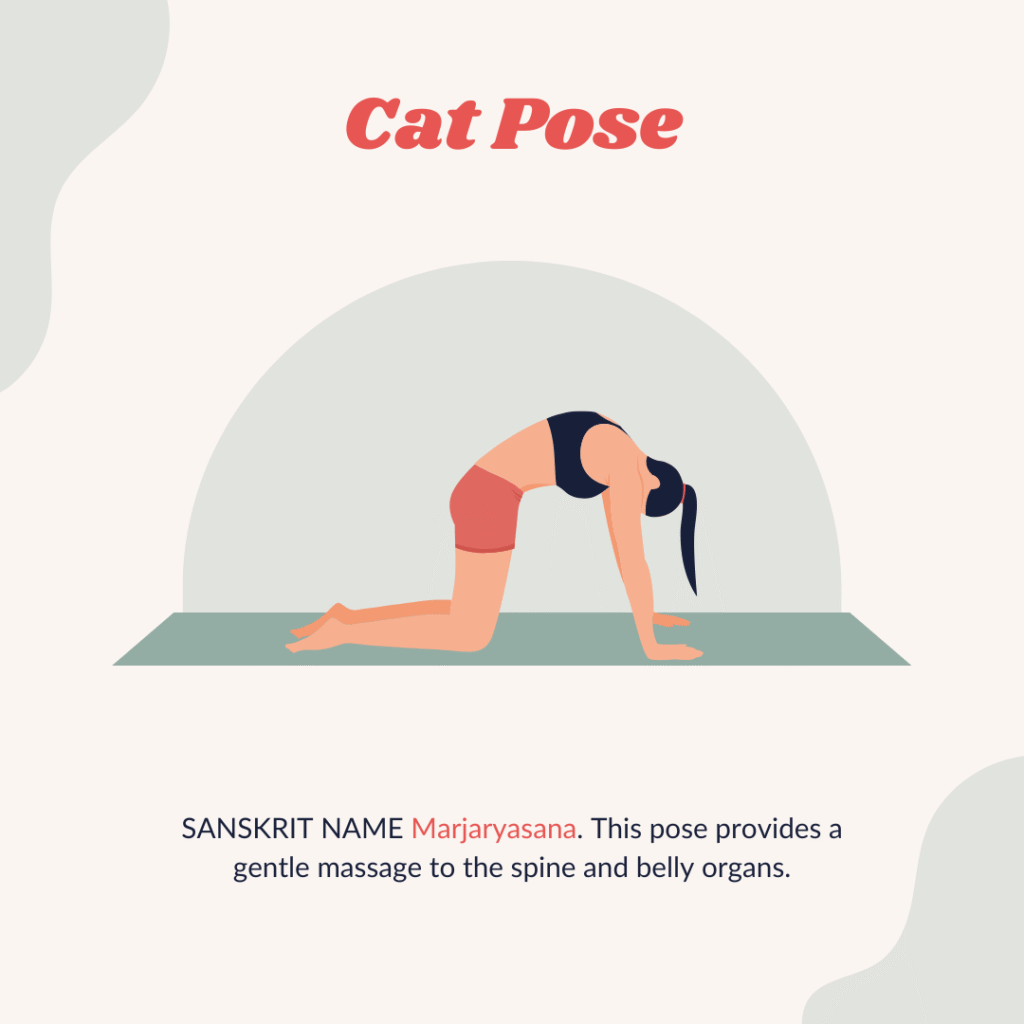
6. Seated Forward Fold (Paschimottanasana)
Sit with legs extended, hinge at the hips, and fold forward. Keep it soft—bend your knees if needed.
Why it helps: Forward folds calm the mind and stretch the hamstrings, which often tighten from long hours at a desk.
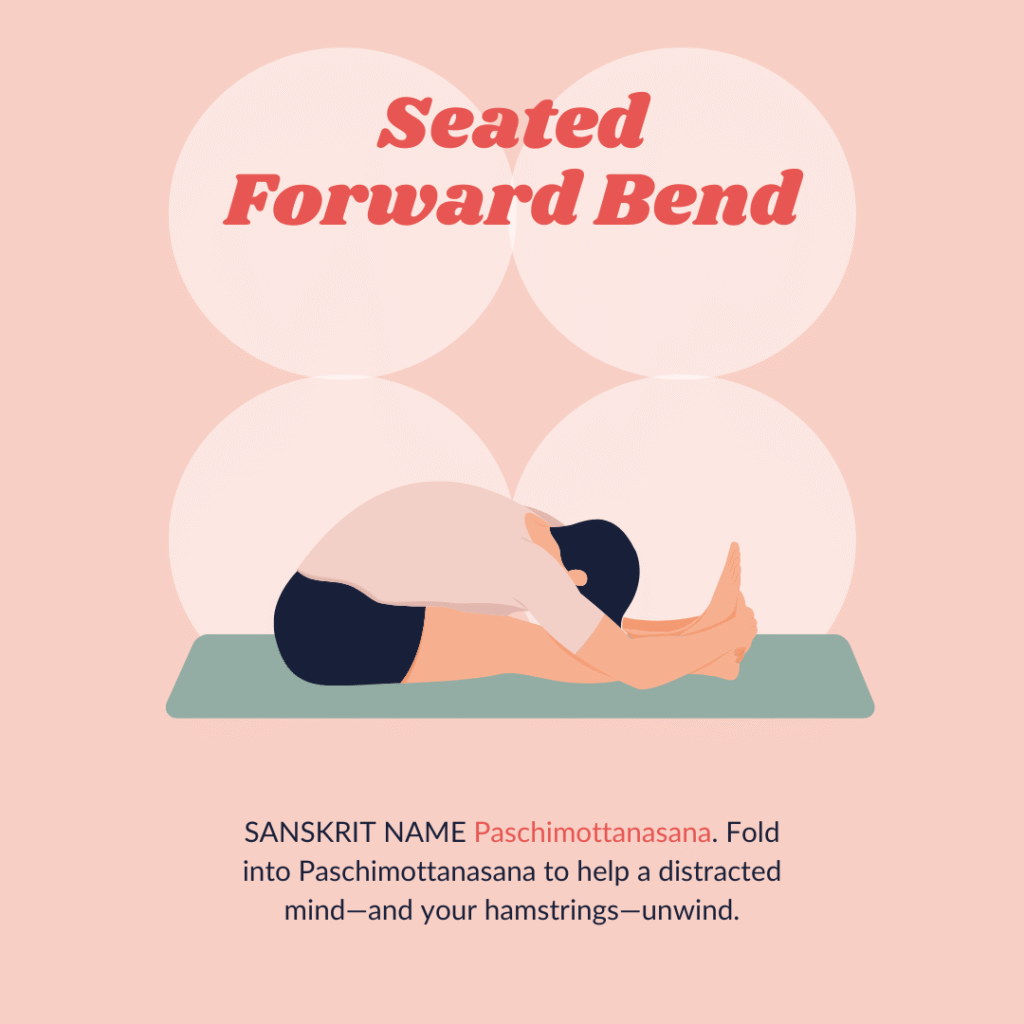
7. Supported Bridge Pose (Setu Bandhasana)
Lie on your back, bend your knees, and place a yoga block or pillow under your sacrum.
Why it helps: This gentle backbend opens the chest and improves circulation without overstimulating the body.
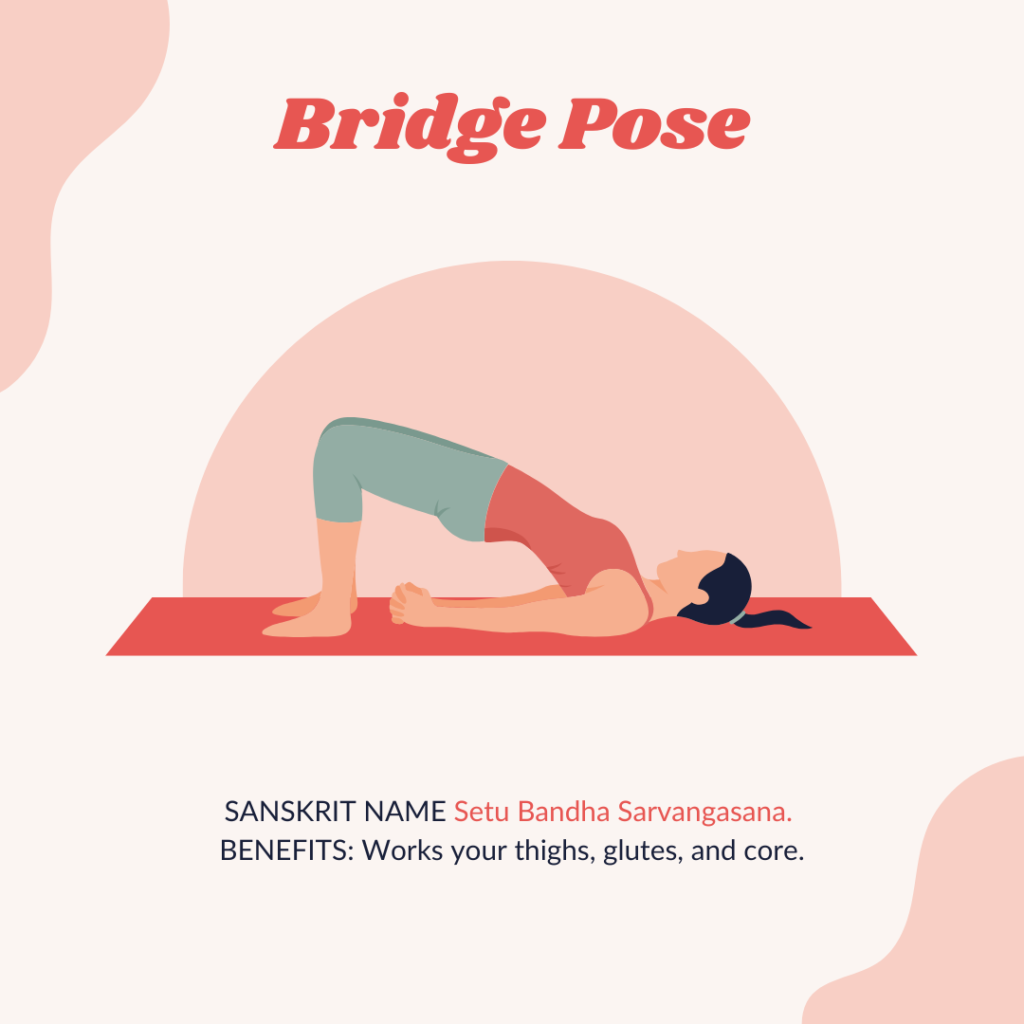
8. Happy Baby Pose (Ananda Balasana)
Lie on your back, grab the outsides of your feet, and gently rock side to side.
Why it helps: It releases tension in the lower back and hips—perfect after a stressful day.
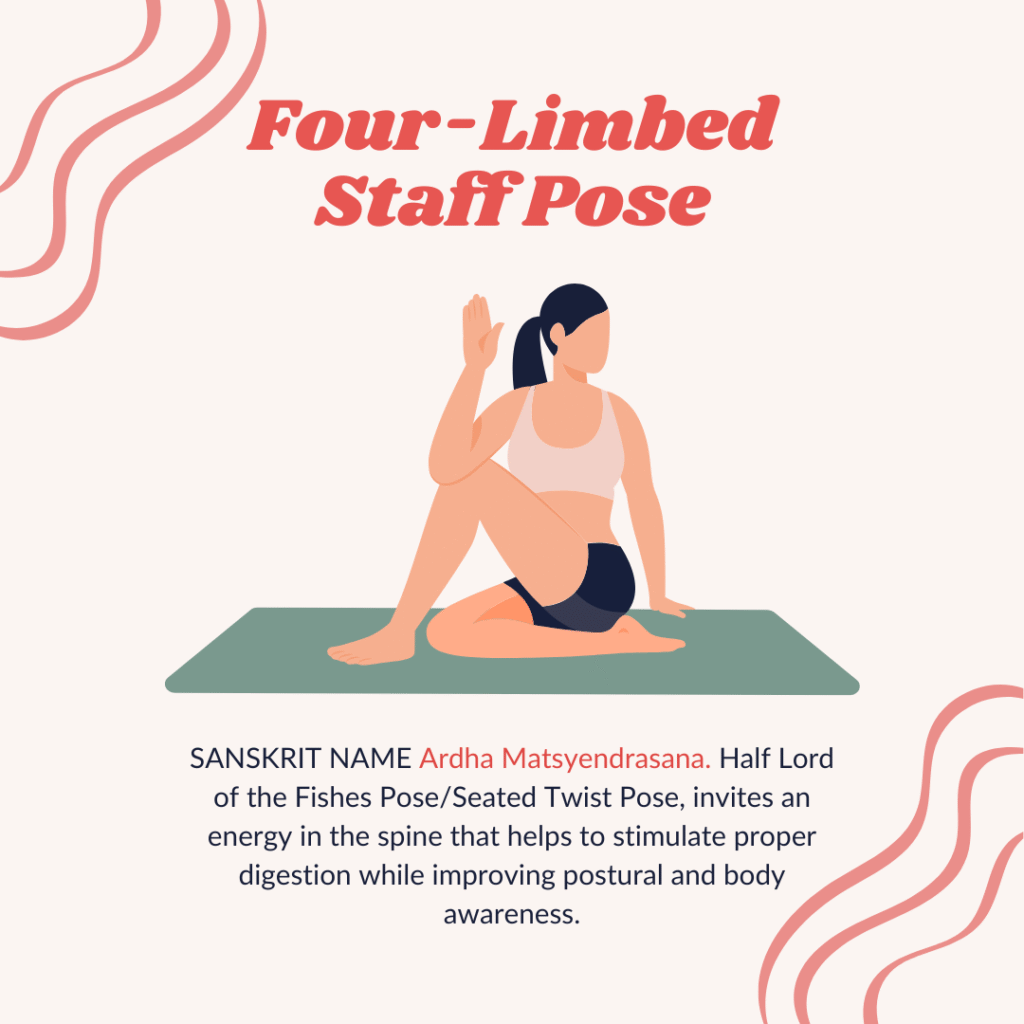
9. Easy Seated Twist
Sit cross-legged, place your right hand or elbow on your left knee, and twist gently. Repeat on the other side.
Why it helps: Twists aid digestion and relieve spinal stiffness, making it easier to settle into sleep.
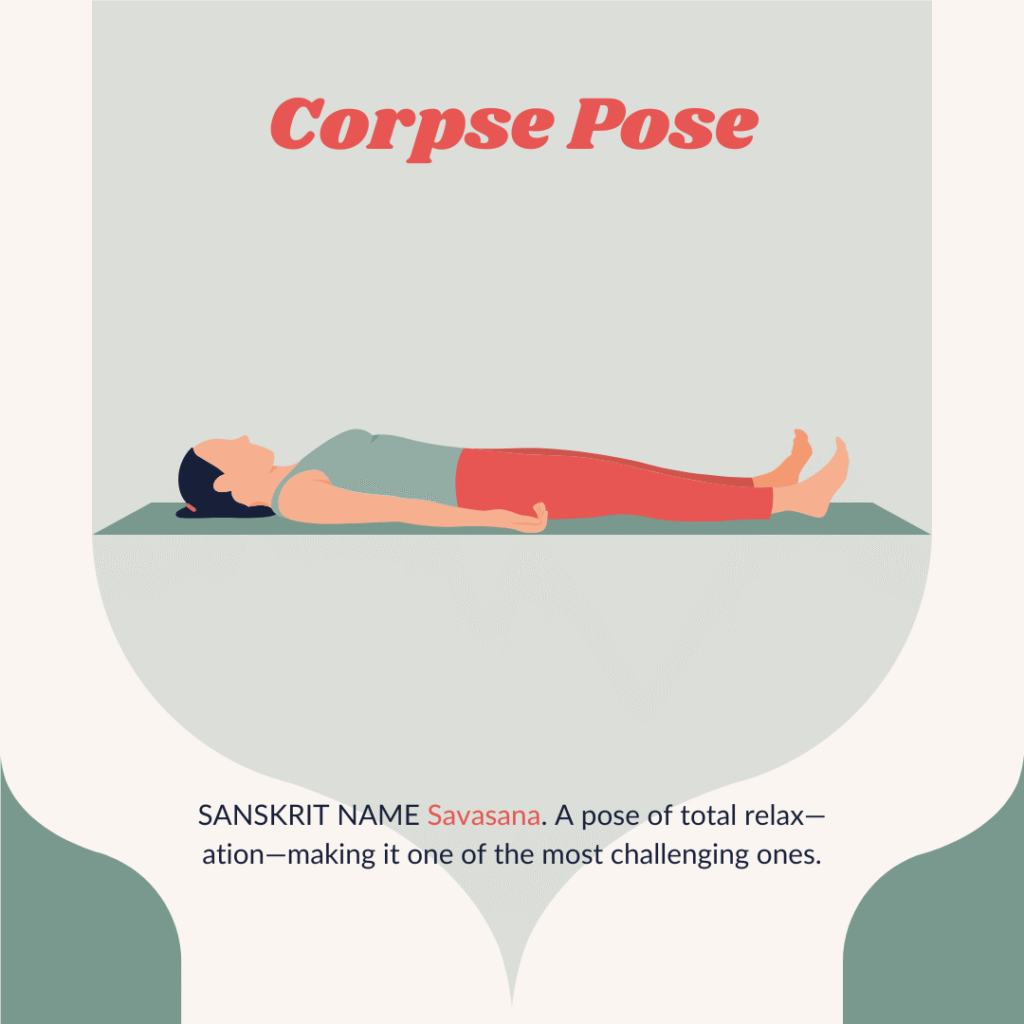
10. Corpse Pose (Savasana)
Lie flat on your back, arms relaxed, palms up. Close your eyes and breathe deeply.
Why it helps: This final relaxation pose integrates the benefits of your bedtime yoga practice and prepares your mind for deep rest.
Breathing: The Missing Piece
Pair these poses with slow, diaphragmatic breathing. Inhale for 4 counts, exhale for 6. This extended exhale activates the parasympathetic system even more, helping you drift into better sleep.
Tips for a Successful Bedtime Yoga Routine
- Keep it gentle: Avoid intense flows or power poses at night.
- Dim the lights: Create a calming environment to signal bedtime.
- Stay consistent: Even 10 minutes nightly can improve sleep quality over time.
- Add mindfulness: Focus on your breath and let go of the day’s thoughts.
The Science Behind Bedtime Yoga and Better Sleep
- A meta-analysis of 19 randomised controlled trials (RCTs) found that yoga was associated with improved sleep quality in women experiencing sleep problems. The analysis, which included data from 19 studies involving 1832 participants, indicated significant improvements in sleep quality for those who practised yoga compared to non-active control groups.
- Yoga practices reduce sympathetic activity and increase parasympathetic tone, which is essential for initiating sleep.
- Gentle yoga combined with breathwork lowers cortisol and heart rate, creating the ideal state for better sleep.
Why I Love This Routine
I started doing these poses after long work days when my mind wouldn’t shut off. Within a week, I noticed I fell asleep faster and woke up feeling more refreshed. Now, it’s my non-negotiable ritual—just like brushing my teeth.
Final Thoughts
If you’ve been struggling with restless nights, try adding these 10 gentle bedtime yoga poses to your evening routine. They’re simple, soothing, and scientifically supported to help you sleep better. Start with two or three poses tonight, and notice how your body and mind respond.
Your next step: Roll out your mat, dim the lights, and give yourself permission to slow down. Sweet dreams start with a calm mind—and a little yoga magic.